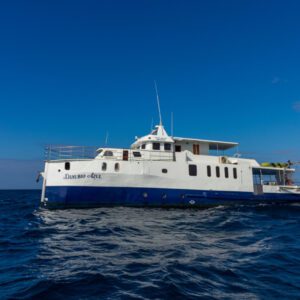
Specifications & Deck Plans
Itinerary A, 4 Days
| DAY 1 | THURSDAY | AM: Arrive to Baltra Airport
PM: Santa Cruz Island, Highlands |
| DAY 2 | FRIDAY | AM: Floreana Island, Post Office
PM: Cormorant Point – Devil`s Crown |
| DAY 3 | SATURDAY | AM: Española Island, Suarez Point
PM: Gardner Bay |
| DAY 4 | SUNDAY | AM: San Cristobal Island, Interpretation Center
San Cristobal Airport |
ITINERARY DAY BY DAY:
TURSDAY: SANTA CRUZ ISLAND
AM: Depart from Guayaquil or Quito
BALTRA ISLAND: This island was a strategic point during the Second World War. It is the main airport for the Galapagos Islands where tourists and colonists arrive and depart. At the Arrival at Baltra Airport, our naturalist English speaking guide will assists you. Transfer to the yacht. Welcome and briefing.
PM: Highlands: After lunch, visit to the Highlands to see the giant tortoises in their natural habitat. The tortoises are easy to spot, lumbering around eating grass and leaves and wallowing. Some highland birds, like cattle egrets, mockingbirds, finches or flycatchers can be seen here. After the hike return to the yacht. Dinner and briefing for next day.
FRIDAY: FLOREANA ISLAND
AM: Post Office Bay: Floreana, like several of the Galápagos Islands, has a history of whaling. During voyages of many months, whaling ships would call here to replenish stocks of food and water, and the sailors were o en keen to send news to loved ones that they were still safe. A tradition grew up here where sailors would leave a letter addressed home, hopeful that a ship heading back to port would pick it up and deliver it for them. This tradition of leaving letters and cards, and picking up others addressed to your home port meant that the location of this letter drop became known as “Post O ice Bay”. Decades later, the uno icial Floreana post o ice is still very active – why not leave a card of your own, or see if you could take one back to your home town for someone else?! As well as this charming tradition, Post O ice Bay boasts a pleasant beach, and there is a short hiking trail down to a cave, which is actually a lava tube that runs down to the sea. You will also have the opportunity to take a Panga through some of the nearby coves and mangroves from which you could see sharks, rays, and Wildlife you might see sea lions swimming around you.
PM: Cormorant Point: Cormorant Point is on the northern tip of Floreana, and you’ll land on a beach that sits between two volcanic cones. The sand on one of the beaches here has a noticeably olive-green color. This is due to a much higher than usual concentration of olivine crystals in the sand. Another beach is made up mainly of coral sand and is almost a brilliant white in comparison. This Galápagos site has a large lagoon which is favored by flamingos, their pink coloring contrasting with the green sand. There is some good snorkeling here, and you can o en spot rays in the shallows. There is a one mile hike available that takes you to higher ground and provides great views over the lagoon, and to both beaches on either side of the Point.
Devil´s Crown: Once a volcanic crater, the Devil’s Crown is now what remains of the eroded crater. The wind and waves have breached the east and west walls, leaving just the northern and southern crater edges showing above the water. Over thousands of years a coral reef has grown in the submerged center, creating one of the best snorkeling sites on the entire Galápagos. Exposed to currents, snorkeling in the Devil’s Crown isn’t a sedentary experience, and the surges can be quite thrilling! The marine life you will see is unparalleled, with colorful reef fish, sharks, rays and more. If water as it’s an experience not to be missed.
SATURDAY: ESPAÑOLA ISLAND
AM: Suares Point: Suarez Point is on the western tip of Espanola and is one of the most wildlife-packed of all the visitor sites in the Galápagos. A er a wet landing on a beach that’s frequented by Galápagos Sea Lions you can enjoy a 2 mile hike along a trail that will take you up around the cli s. The range of wildlife on show here is simply stunning. This is a great place to view the remarkable Galápagos Blue-Footed Booby as well as their cousins the Nazca Booby. You can also see the rare Waved Albatross at Suarez Point, where they use the cli tops to launch themselves into the air over the ocean. Another famous natural feature here is the blowhole. This geological formation funnels the incoming waves into a chamber where it gets compressed and then the air and seawater are forced out at great speed, making a spectacular plume of water shoot high into the air.
PM: Gardner Bay: Gardner Bay is a wonderfully sheltered area on the eastern shore of Espanola Island. It boasts one of the best beaches in the Galápagos, with superb white sand. There is nowhere better on the archipelago to simply sit back, relax, and take in the marvels of the wildlife around you. The beach here is home to a large colony of Galápagos Sea Lions, who seem to love sunbathing on the beach as much as we humans do! As well as the fun-loving Sea Lions you can also find Galápagos Mockingbirds here. These birds are full of curiosity, and have been known to come and investigate bootlaces, camera straps and other equipment! The wonderful Galápagos Green Sea Turtle can also o en be seen in the shallows here, and along with a large variety of colorful reef fish, this makes Gardner Bay a great place to swim and snorkel.
SUNDAY: SAN CRISTOBAL ISLAND
Travel to the dramatic Kicker Rock in the morning to witness the steep vertical stone walls rising from the ocean.
Later, learn about the history of the Islands at the San Cristóbal Interpretation Centre.
AM: Interpretation Center Visit
San Cristóbal Island (1h-2h)
Learn about the history of the Galápagos Islands from the very beginning of their volcanic origins through to
today’s conservation efforts. Tour the Human History exhibit to learn about the islands’ discovery and
colonization, and discover the natural history and variety of flora and fauna that make the Galápagos so
fascinating.
After this visit transfer to San Cristobal Airport for your return flight to Guayaquil/Quito
This is the end of the trip.
Important: Itineraries are unlikely to change significantly but are subject to change. Weather, wildlife breeding, safety concerns, instructions from the Galapagos National Park, specific abilities and interests of passengers as well as operational matters may cause your guide or captain to change the time or nature of visits. Your guide and captain will always endeavor to select the best itinerary within these limits.
Itinerary A, 5 Days
| DAY 1 | SUNDAY | AM: Arrive to Baltra Airport
PM: Santa Cruz I.: Bachas beach |
| DAY 2 | MONDAY | AM: Genovesa I.: Darwin Bay
PM: El Barranco – Prince Philip´s Steps |
| DAY 3 | TUESDAY | AM: Bartolome Island.
PM: Santiago Island: Sulliva Bay |
| DAY 4 | WEDNESDAY | AM: Santa Cruz I.: Black Turtle Cove
PM: Dragon Hill |
| DAY 5 | THURSDAY | AM: Santa Cruz I.: Charles Darwin Station
Transfer to Baltra Airport |
ITINERARY DAY BY DAY:
DAY 1: SUNDAY
AM: BALTRA TRANSFER TO THE BOAT
The landscape below will seem otherworldly – you’ll truly be landing in a place like no other. The Galapagos Islands are completely unique and you’re about to see why. Your bilingual naturalist guide will greet you at the airport and meet you after customs. During lunch he/she will introduce you to the islands, specifically the flora and fauna that you will encounter at our first destination, Las Bachas Beach.
PM: SANTA CRUZ: BACHAS BEACH
On the sandy white beaches of Las Bachas you will get a close look at a sea turtle nesting area as well as a lake frequented by pink flamingos and other migratory birds. Afterwards, you’ll cool off with a dip in the beautiful, blue Pacific Ocean. As this is the first evening together, the crew will invite everyone to a pre-dinner cocktail on the yacht before the welcome dinner. If the night is clear, as it usually is, the stars above will sparkle; look for the Southern Cross, the Big Dipper (turned up-side down!) and Orion.
DAY 2: MONDAY
AM: GENOVESA ISLAND: DARWIN BAY
A beautiful bay area due to the great diversity of seabirds that nest in the mangroves that dominate the area. These include red-footed boobies, Nazca boobies, swallow-tailed gulls, Galápagos petrels, seabirds, Darwin finches, mockingbirds, and Galápagos doves.
PM: GENOVESA ISLAND:- PRINCE PHILIP’S STEPS
We will climb 25 meters of stairs at one of the best bird nesting sites on the islands. We will have the opportunity to snorkel, hike, and take a ride in a panga.
DAY 3: TUESDAY
AM: BARTOLOME ISLAND
Bartolome Island, which at its highest point is 114 meters, is one of the most photographed vistas in the archipelago. This island is quite young and quite volcanic, therefore, it’s relatively unpopulated; only a small handful of die-hard plant and animal
species have survived long enough to call this lava-land home.
PM: SANTIAGO ISLAND: SULLIVAN BAY
After the visit to Bartolome Island you’ll visit nearby Sullivan Bay. At the turn of the century a huge lava flow spilled right down to the sea and today you can stroll across this black volcanic expanse, admiring its time-frozen ripples, bubbles and ropes.
DAY 4: WEDNESDAY
AM: BLACK TURTLE COVE
Black Turtle Cove, is a red mangrove lagoon on Santa Cruz and is a nursery for many sharks and rays. It’s also a great location to observe mating turtles around this time of year. You might see a large groups of resting White-Tip Reef Sharks, schools of Golden Rays and Spotted Eagle Rays, and a few juvenile Scalloped Hammerhead Sharks and Black-Tip Sharks. The water very calm so we often used paddles instead of the loud panga engines to move around the area.
PM: SANTA CRUZ: DRAGON HILL
After this visit you’ll navigate for a couple of hours to Dragon Hill, where you’ll make a dry landing on lava rocks. Dragon Hill is a small bay on the west coast of Santa Cruz and got its name from the many land iguanas that live in the area. Land iguanas are endemic to the Galapagos Islands where they have found good mating and
DAY 5: THURSDAY
AM: SANTA CRUZ (DRY LANDING): CHARLES DARWIN STATION
Charles Darwin Station. After breakfast you’ll sail to Santa Cruz Island, where you’ll visit the world-famous Charles Darwin Station, a non-profit institution that dedicates itself to studying and protecting the flora and fauna of the Galapagos. This is one of the best places to see land tortoises, including Lonesome George museum. Then you’ll visit the station’s Tortoise Rearing Center. Here you can find baby, hand-sized tortoises, between the ages of one and five, and marvel at how they achieve such large sizes as adults (500 lbs. or more!). Galapagos tortoises are believed to have a lifespan of over 100 years, so the young ones have a long life ahead of them as long as they receive the protection they need. Aside from the Station headquarters, Santa Cruz Island is home to the largest town and economic center of the Galapagos, Puerto Ayora. In this portside town you can buy souvenirs (postcards, t-shirts, books, etc.) of the islands. Check out the unique Galapagos ceramic shop near the entrance of the Charles Darwin Station.
After this visit transfer to Baltra Airport for your return flight to Guayaquil/Quito
This is the end of the trip.
Important: Itineraries are unlikely to change significantly but are subject to change. Weather, wildlife breeding, safety concerns, instructions from the Galapagos National Park, specific abilities and interests of passengers as well as operational matters may cause your guide or captain to change the time or nature of visits. Your guide and captain will always endeavor to select the best itinerary within these limits.
Itinerary A, 6 days
| DAY 1 | THURSDAY | AM: Arrive to Baltra Airport
PM: Santa Cruz Island, Highlands |
| DAY 2 | FRIDAY | AM: Floreana Island, Post Office
PM: Cormorant Point – Devil`s Crown |
| DAY 3 | SATURDAY | AM: Española Island, Suarez Point
PM: Gardner Bay |
| DAY 4 | SUNDAY | AM: San Cristobal Island, Interpretation Center PM: Lobos Island |
| DAY 5 | MONDAY | AM: Santa Fe Island, A walk on Sant Fe
PM: South Plaza Island, A walk on South Plaza |
| DAY 6 | TUESDAY | AM: Santa Cruz Island, Charles Darwin Station. Transfer to the Baltra Airport, |
ITINERARY DAY BY DAY:
TURSDAY: SANTA CRUZ ISLAND
AM: Depart from Guayaquil or Quito
BALTRA ISLAND: This island was a strategic point during the Second World War. It is the main airport for the Galapagos Islands where tourists and colonists arrive and depart. At the Arrival at Baltra Airport, our naturalist English speaking guide will assists you. Transfer to the yacht. Welcome and briefing.
PM: Highlands: After lunch, visit to the Highlands to see the giant tortoises in their natural habitat. The tortoises are easy to spot, lumbering around eating grass and leaves and wallowing. Some highland birds, like cattle egrets, mockingbirds, finches or flycatchers can be seen here. After the hike return to the yacht. Dinner and briefing for next day.
FRIDAY: FLOREANA ISLAND
AM: Post Office Bay: Floreana, like several of the Galápagos Islands, has a history of whaling. During voyages of many months, whaling ships would call here to replenish stocks of food and water, and the sailors were o en keen to send news to loved ones that they were still safe. A tradition grew up here where sailors would leave a letter addressed home, hopeful that a ship heading back to port would pick it up and deliver it for them. This tradition of leaving letters and cards, and picking up others addressed to your home port meant that the location of this letter drop became known as “Post O ice Bay”. Decades later, the uno icial Floreana post o ice is still very active – why not leave a card of your own, or see if you could take one back to your home town for someone else?! As well as this charming tradition, Post O ice Bay boasts a pleasant beach, and there is a short hiking trail down to a cave, which is actually a lava tube that runs down to the sea. You will also have the opportunity to take a Panga through some of the nearby coves and mangroves from which you could see sharks, rays, and Wildlife you might see sea lions swimming around you.
PM: Cormorant Point: Cormorant Point is on the northern tip of Floreana, and you’ll land on a beach that sits between two volcanic cones. The sand on one of the beaches here has a noticeably olive-green color. This is due to a much higher than usual concentration of olivine crystals in the sand. Another beach is made up mainly of coral sand and is almost a brilliant white in comparison. This Galápagos site has a large lagoon which is favored by flamingos, their pink coloring contrasting with the green sand. There is some good snorkeling here, and you can o en spot rays in the shallows. There is a one mile hike available that takes you to higher ground and provides great views over the lagoon, and to both beaches on either side of the Point.
Devil´s Crown: Once a volcanic crater, the Devil’s Crown is now what remains of the eroded crater. The wind and waves have breached the east and west walls, leaving just the northern and southern crater edges showing above the water. Over thousands of years a coral reef has grown in the submerged center, creating one of the best snorkeling sites on the entire Galápagos. Exposed to currents, snorkeling in the Devil’s Crown isn’t a sedentary experience, and the surges can be quite thrilling! The marine life you will see is unparalleled, with colorful reef fish, sharks, rays and more. If water as it’s an experience not to be missed.
SATURDAY: ESPAÑOLA ISLAND
AM: Suares Point: Suarez Point is on the western tip of Espanola and is one of the most wildlife-packed of all the visitor sites in the Galápagos. A er a wet landing on a beach that’s frequented by Galápagos Sea Lions you can enjoy a 2 mile hike along a trail that will take you up around the cli s. The range of wildlife on show here is simply stunning. This is a great place to view the remarkable Galápagos Blue-Footed Booby as well as their cousins the Nazca Booby. You can also see the rare Waved Albatross at Suarez Point, where they use the cli tops to launch themselves into the air over the ocean. Another famous natural feature here is the blowhole. This geological formation funnels the incoming waves into a chamber where it gets compressed and then the air and seawater are forced out at great speed, making a spectacular plume of water shoot high into the air.
PM: Gardner Bay: Gardner Bay is a wonderfully sheltered area on the eastern shore of Espanola Island. It boasts one of the best beaches in the Galápagos, with superb white sand. There is nowhere better on the archipelago to simply sit back, relax, and take in the marvels of the wildlife around you. The beach here is home to a large colony of Galápagos Sea Lions, who seem to love sunbathing on the beach as much as we humans do! As well as the fun-loving Sea Lions you can also find Galápagos Mockingbirds here. These birds are full of curiosity, and have been known to come and investigate bootlaces, camera straps and other equipment! The wonderful Galápagos Green Sea Turtle can also o en be seen in the shallows here, and along with a large variety of colorful reef fish, this makes Gardner Bay a great place to swim and snorkel.
SUNDAY: SAN CRISTOBAL ISLAND
Travel to the dramatic Kicker Rock in the morning to witness the steep vertical stone walls rising from the ocean.
Later, learn about the history of the Islands at the San Cristóbal Interpretation Centre. In the afternoon, head to
Isla Lobos known for its friendly sea lions.
AM: Interpretation Center Visit
San Cristóbal Island (1h-2h)
Learn about the history of the Galápagos Islands from the very beginning of their volcanic origins through to
today’s conservation efforts. Tour the Human History exhibit to learn about the islands’ discovery and
colonization, and discover the natural history and variety of flora and fauna that make the Galápagos so
fascinating.
PM: Isla Lobos Visit
Isla Lobos
Explore this tiny island for great wildlife encounters. Either by foot or by panga, view the sea and shore birds
nesting and feeding. Spot a small colony of blue-footed boobies as well as two species of sea lions.
MONDAY: SANTA FE ISLAND AND SOUTH PLAZA ISLAND
AM: A walk on Santa Fe: Santa Fe is a small, flat island right in the center of the Galápagos archipelago, and is thought to be one of the oldest volcanoes here. Dating of the rocks below the water estimates they were formed almost 4 million years ago. Santa Fe had its own breed of Giant Tortoise that became extinct at some point in the 1800s due to being hunted for meat. There are two species that are unique to the island still present here – the Santa Fe Land Iguana and the Santa Fe Rice Rat. There is one visitor site on Santa Fe, and you will have a panga ride to a wet landing on the beach at Barrington Bay on the island’s north coast. From here there are two hiking trails. One is a short loop close to the beach that takes you into an Opuntia forest filled with these massive cactus. This is the best opportunity to see the Santa Fe land iguanas and also other species such as Galápagos Hawks. The second trail is a tougher proposition as it climbs quite steeply to the top of a cli from where you will enjoy stunning views over the island’s unspoilt interior. Back on the beach you can join the Galápagos Sea Lions who o en play in the waves and you can enjoy some wonderful snorkeling in the clear blue-green waters here.
PM: A walk on South Plaza: Whilst her twin, North Plaza, is closed to visitors, South Plaza is one of the best visitor sites in the Galápagos thanks to the large number of species present on her small area. The Plazas were formed as the result of a geological upli , and because this was uneven they both have cli s on their south sides and low lying shores on their northern coasts. The most noticeable (and noisiest) of South Plaza’s residents are her Galápagos Sea Lions, who have a large colony here. Less obvious are her land iguanas (the smallest in the islands), many marine iguanas and large numbers and varieties of seabirds. Inland is a mix of scrubby vegetation and giant opuntia cactus forest, providing food for the iguanas. As you follow the circular hiking trail you will come to the summit of the cli s here where you’ll be among countless nesting seabirds.
TUESDAY: SANTA CRUZ ISLAND
AM: Charles Darwin Research Station: The world famous Charles Darwin Research Center is just a 10 minute walk from downtown Puerto Ayora, and is the home of the non-profit Charles Darwin Foundation. Inside, you’ll find exhibits about the geography, geology and climate of the Galápagos, and the evolution of her unique species. There is also lots of information on the Foundation’s current conservation and education programs. As well as conducting it’s own key research, the Charles Darwin Center also hosts international scientists, and supports the work of government agencies like the Galápagos National Park. Next door is the site of the Galápagos’ first giant tortoise breeding center, where pioneering work has been done since 1965 for the preservation of these species. Here you can see newly hatched babies, up to juveniles and full-grown adults ready to be released back into the wild.
After this visit transfer to Baltra Airport for your return flight to Guayaquil/Quito
This is the end of the trip.
Important: Itineraries are unlikely to change significantly but are subject to change. Weather, wildlife breeding, safety concerns, instructions from the Galapagos National Park, specific abilities and interests of passengers as well as operational matters may cause your guide or captain to change the time or nature of visits. Your guide and captain will always endeavor to select the best itinerary within these limits.
Itinerary B, 6 days
| DAY 1 | TUESDAY | AM: Baltra Airport
PM: Highlands |
| DAY 2 | WEDNESDAY | AM: Isabela I.: Sierra Negra Volcano
PM: Giant Tortoise Breeding Center-Flamingo Lagoon |
| DAY 3 | THURSDAY | AM: Isabela I.: Punta Moreno
PM: Bahía Elizabeth |
| DAY 4 | FRIDAY | AM: Isabela I.: Tagus Cove
PM: Fernandina I.: Punta Espinoza |
| DAY 5 | SATURDAY | AM: Santiago I.: Puerto Egas
PM: Rabida Island |
| DAY 6 | SUNDAY | AM: Seymour Norte Transfer to Baltra Airport |
ITINERARY DAY BY DAY:
DAY 1: TUESDAY
AM: BALTRA AIRPORT
Fly from the Ecuadorian mainland to the islands on a 90-minute early morning flight. As you prepare to land in Baltra, look out the window. The landscape below will seem otherworldly – you will truly land in a place like no other. The Galapagos Islands are completely unique and you are about to see why. Your bilingual naturalist guide will meet you at the airport and meet you after the respective check-in points.
PM: SANTA CRUZ: HIGHLANDS
After the transfer from the airport to Puerto Ayora, journey by bus to the highlands to go for a walk through the giant lava tubes and also have the unique opportunity to see the giant tortoises in the wild quite close to you in their natural surroundings. After this activity there will be some free time to explore the town of Puerto Ayora on your own.
DAY 2: WEDNESDAY
AM: ISABELA: SIERRA NEGRA VOLCANO
Your first visit in the morning will take place to Volcan Sierra Negra , will be a walk around 30 minutes to the lap of this famous volcano at Isabela Island. Volcan Sierra Negra is a large shield volcano at the South eastern end of Isabela Island in the Galapagos that rises to an altitude of 1124m. Also is considered one of the oldest Volcano at the Islands.
PM: ISABELA: GIANT TORTOISE BREEDING CENTRE – FLAMINGO LAGOON
Giant Tortoise Breeding Centre Visit
Isabela Island (2h-3h)
Walk through the town’s wetlands to visit the Giant Tortoise Breeding Centre. With the giant tortoise on its way to
extinction in the late 1950s, this program was established to protect these noble creatures.
Flamingo Lagoon Visit
Isabela Island
Spend some time exploring Isabela’s natural attractions. Enjoy a walk to the largest coastal lagoon in the
Galápagos, also a principal breeding ground for flamingos. Make stops along the way at a lookout point, and to
visit natural pools, beaches, and mangrove swamps. Also stop along the way at the Giant Tortoise Breeding
Centre to see how these fascinating creatures are hatched, cared for and released into the wild in the ongoing
efforts to protect the species.
DAY 3: THURSDAY
AM: ISABELA: PUNTA MORENO
After night navigation you’ll arrive to Punta Moreno on the west coast of Isabela, a dry landing on a lava field. The vegetation found in this area is sparse and concentrated mainly in the mangrove area and around the lakes. It should be noted that the three kinds of cacti are found here. The main attractions at Punta Moreno are the coastal lagoons amid black lava flows where there are several species of birds. Here you’ll have a panoramic view of three of the most active volcanoes in the Galapagos, which are Sierra Negra, Cerro Azul of Isabela Island and La Cumbre of Fernandina Island
PM: ISABELA: BAHÍA ELIZABETH
After lunch on board you’ll continue on your way to Elizabeth bay, located on Isabela Island`s west shore, which is an excellent spot for observing marine life. You’ll motor past a few islands where you can usually see Galapagos Penguins; this is one of the best areas to take their photos. A colony of these magnificent birds inhabit a rocky islet at the entrance to Elizabeth Bay.
We’ll let our boat drift through a small passage lined with mangroves and eventually emerge into an enclosed cove. We’ll turn the motor off and look in the sheltered waters for Marine Turtles, Rays, Flightless Cormorants, Sea Lions, and, circling overhead, Galapagos Hawks.
DAY 4: FRIDAY
AM: ISABELA: TAGUS COVE
Stop for a visit at Tagus Cove and hike to a lookout to get a stunning view of the bay. Spot old graffiti on the cliffs
from whalers and pirates who once visited the the cove. Continue to Punta Espinoza on Fernandina, the youngest
of the Galápagos Islands, where you will have an opportunity to snorkel. Witness the large colony of marine
iguanas and a variety of bird life.
Tagus Cove Visit
Tagus Cove
Visit Tagus Cove, an Isabela Island anchorage site that was popular among whalers and pirates. Tour the area on
foot for spectacular views of Darwin Lake (a spherical saltwater crater), the bay, and Darwin and Wolf volcanoes.
Upon landing, take the wooden stairway to the trail entrance, and follow the trail through a dry vegetation zone.
Opt to continue on an ascent to a promontory made up of spatter cones (small volcanic cones) or explore the
area by dinghy.
AM: FERNANDINA: PUNTA ESPINOZA
Punta Espinoza Visit
Punta Espinoza
Tour a number of different trails at this not-to-be-missed landing site that’s home to some of the largest
colonies of marine iguanas and sea birds. Follow the path along the beach and across lava flows for a unique
opportunity to explore one of the least-visited areas of the Galápagos. Here, you will also have a chance to
snorkel.
DAY 5: SATURDAY
AM: SANTIAGO: PUERTO EGAS
James Bay is a black sand beach located on the west side of James Bay and northwest of Santiago Island. South of the beach is Sugarloaf Volcano, which has deposits of volcanic tuff, the same that helped the formation of the black sand beach. El Cráter is just north of this site, it has a saltwater lagoon, which during the summer dry season becomes a salt mine. Between 1928 and 1930 was the first exploitation of salt; but the efforts did not last long. Then again in 1964 a new attempt was made that lasted for some time. After lunch on board we’ll navigate to our next destination, Rabida
PM: RABIDA ISLAND
Rábida Island consists of a red sand beach, a coastal lagoon behind the beach, and a loop trail. The approximate distance of the trail is 1.1 kilometers.
The color of the rocks and sand on the beach is due to the very porous volcanic material, which with the help of environmental factors (rain, salt water and sea breeze), has acted as an oxidizing agent.
The main attraction of this spot is the red sand beach and scenery, aside from the vegetation of the arid zone and the presence of native and endemic species.
DAY 6: SUNDAY
AM: SEYMOUR NORTE
After an early breakfast you’ll disembark at North Seymour Island. Here you will see Frigate Birds, the clownish Blue-Footed Booby, and of course the ubiquitous Sea Lions. With luck you’ll witness the striking courtship display of the male Frigate Bird, in which he inflates a red balloon-like sac below his throat and struts his stuff for all of the young females. Seymour North, Plaza Sur, Plaza Norte, Baltra, northeastern Santa Cruz, Santa Fe and part of Española, were all formed by uprisings of underwater volcanic lavas. They were part of a volcanic lava table deposited in sheet form along cracks located on the ocean floor. The uprisings occurred sporadically and lasted more than a million years to reach its current level.
All marine fossils found in the archipelago are found in these islands and the best example is the North Channel side of Baltra. The fossils date from the Pleistocene, and specifically in the case of Baltra, one can say that these volcanic tables were close to the surface about a million years ago.
Return to the boat & sail to Baltra Island to catch your plane back to the mainland.
Important: Itineraries are unlikely to change significantly but are subject to change. Weather, wildlife breeding, safety concerns, instructions from the Galapagos National Park, specific abilities and interests of passengers as well as operational matters may cause your guide or captain to change the time or nature of visits. Your guide and captain will always endeavor to select the best itinerary within these limits.
Itinerary C, 8 Days
| DAY 1 | SUNDAY | AM: Arrive to Baltra Airport
PM: Santa Cruz I.: Bachas beach |
| DAY 2 | MONDAY | AM: Genovesa I.: Darwin Bay
PM: El Barranco – Prince Philip´s Steps |
| DAY 3 | TUESDAY | AM: Bartolome Island.
PM: Santiago Island: Sulliva Bay |
| DAY 4 | WEDNESDAY | AM: Santa Cruz I.: Black Turtle Cove
PM: Dragon Hill |
| DAY 5 | THURSDAY | AM: Santa Cruz I.: Charles Darwin Station
PM: Highlands |
| DAY 6 | FRIDAY | AM: Floreana I.: Post Office
PM: Cormorant Point – Devil`s Crown |
| DAY 7 | SATURDAY | AM: Española I.: Suarez Point
PM: Gardner Bay |
| DAY 8 | SUNDAY | AM: San Cristobal I.: Interpretation Center Transfer to San Cristobal Airport |
ITINERARY DAY BY DAY:
DAY 1: SUNDAY
AM: BALTRA TRANSFER TO THE BOAT
The landscape below will seem otherworldly – you’ll truly be landing in a place like no other. The Galapagos Islands are completely unique and you’re about to see why. Your bilingual naturalist guide will greet you at the airport and meet you after customs. During lunch he/she will introduce you to the islands, specifically the flora and fauna that you will encounter at our first destination, Las Bachas Beach.
PM: SANTA CRUZ: BACHAS BEACH
On the sandy white beaches of Las Bachas you will get a close look at a sea turtle nesting area as well as a lake frequented by pink flamingos and other migratory birds. Afterwards, you’ll cool off with a dip in the beautiful, blue Pacific Ocean. As this is the first evening together, the crew will invite everyone to a pre-dinner cocktail on the yacht before the welcome dinner. If the night is clear, as it usually is, the stars above will sparkle; look for the Southern Cross, the Big Dipper (turned up-side down!) and Orion.
DAY 2: MONDAY
AM: GENOVESA ISLAND: DARWIN BAY
A beautiful bay area due to the great diversity of seabirds that nest in the mangroves that dominate the area. These include red-footed boobies, Nazca boobies, swallow-tailed gulls, Galápagos petrels, seabirds, Darwin finches, mockingbirds, and Galápagos doves.
PM: GENOVESA ISLAND:- PRINCE PHILIP’S STEPS
We will climb 25 meters of stairs at one of the best bird nesting sites on the islands. We will have the opportunity to snorkel, hike, and take a ride in a panga.
DAY 3: TUESDAY
AM: BARTOLOME ISLAND
Bartolome Island, which at its highest point is 114 meters, is one of the most photographed vistas in the archipelago. This island is quite young and quite volcanic, therefore, it’s relatively unpopulated; only a small handful of die-hard plant and animal
species have survived long enough to call this lava-land home.
PM: SANTIAGO ISLAND: SULLIVAN BAY
After the visit to Bartolome Island you’ll visit nearby Sullivan Bay. At the turn of the century a huge lava flow spilled right down to the sea and today you can stroll across this black volcanic expanse, admiring its time-frozen ripples, bubbles and ropes.
DAY 4: WEDNESDAY
AM: BLACK TURTLE COVE
Black Turtle Cove, is a red mangrove lagoon on Santa Cruz and is a nursery for many sharks and rays. It’s also a great location to observe mating turtles around this time of year. You might see a large groups of resting White-Tip Reef Sharks, schools of Golden Rays and Spotted Eagle Rays, and a few juvenile Scalloped Hammerhead Sharks and Black-Tip Sharks. The water very calm so we often used paddles instead of the loud panga engines to move around the area.
PM: SANTA CRUZ: DRAGON HILL
After this visit you’ll navigate for a couple of hours to Dragon Hill, where you’ll make a dry landing on lava rocks. Dragon Hill is a small bay on the west coast of Santa Cruz and got its name from the many land iguanas that live in the area. Land iguanas are endemic to the Galapagos Islands where they have found good mating and
DAY 5: THURSDAY
AM: SANTA CRUZ (DRY LANDING): CHARLES DARWIN STATION
Charles Darwin Station. After breakfast you’ll sail to Santa Cruz Island, where you’ll visit the world-famous Charles Darwin Station, a non-profit institution that dedicates itself to studying and protecting the flora and fauna of the Galapagos. This is one of the best places to see land tortoises, including Lonesome George museum. Then you’ll visit the station’s Tortoise Rearing Center. Here you can find baby, hand-sized tortoises, between the ages of one and five, and marvel at how they achieve such large sizes as adults (500 lbs. or more!). Galapagos tortoises are believed to have a lifespan of over 100 years, so the young ones have a long life ahead of them as long as they receive the protection they need. Aside from the Station headquarters, Santa Cruz Island is home to the largest town and economic center of the Galapagos, Puerto Ayora. In this portside town you can buy souvenirs (postcards, t-shirts, books, etc.) of the islands. Check out the unique Galapagos ceramic shop near the entrance of the Charles Darwin Station.
PM: SANTA CRUZ: HIGHLANDS
After shopping in Puerto Ayora and lunch on the boat (guests may dine in town if they desire), you’ll explore the highlands or “parte alta” of the island, which is a moisture-rich area with fertile volcanic soils. You’ll learn about the vegetation and animal life of this zone, often strikingly different than that found at lower elevations and our best opportunity to find the famous giant tortoises in their natural habitat. Darwin’s Finches, Yellow Warblers, and other land birds will fly in and out of the moss-covered trees. From this high vantage point you’ll be treated to beautiful views of the island.
In the late afternoon you’ll return to town. For those who wish to check out the nightlife, this is your chance; the boat will be docked in port most of the night.
DAY 6: FRIDAY
AM: FLOREANA: POST OFFICE BAY
When you wake up and look out your porthole on Day 6 you will see Floreana, one of the greenest islands in the archipelago. Ask your guide to tell you about its mysterious history laden with rumors a murderous baronesses, blackmail, and dubious disappearances. Your first stop is Post Office Bay, where the islands’ original post office (really only a wooden barrel) was established in 1793. The current system still functions as it did three centuries ago: Visitors drop off unstamped letters and postcards AND pick-up whatever mail they can hand deliver themselves when they return home! (Try it, it actually works!).
PM: FLOREANA: CORMORANT POINT
Back on the yacht and after lunch you’ll skirt the island’s coast until you arrive at La Corona del Diablo (the Devil’s Crown), an old volcanic crater that offers some of the most spectacular snorkeling in the Galapagos. This is a great spot for seeing the wide array of tropical fish, many endemic to the islands, including purple sea stars and spiky sea urchins. The crater’s most thrilling undersea creatures, however, are the white-tipped sharks. As with most of the creatures in the Galapagos they are unperturbed by your presence, so you can swim in their company freely and fearlessly. After returning to the boat you will visit Punta Cormorant, where you’ll follow a footpath to a lagoon inhabited by flaming-pink flamingos. You will also pass by a white sand beach, a Sea Turtle nesting area and a great spot for watching sea birds and sea rays.
Devil´s Crown: Once a volcanic crater, the Devil’s Crown is now what remains of the eroded crater. The wind and waves have breached the east and west walls, leaving just the northern and southern crater edges showing above the water. Over thousands of years a coral reef has grown in the submerged center, creating one of the best snorkeling sites on the entire Galápagos. Exposed to currents, snorkeling in the Devil’s Crown isn’t a sedentary experience, and the surges can be quite thrilling! The marine life you will see is unparalleled, with colorful reef fish, sharks, rays and more. If water as it’s an experience not to be missed.
DAY 7: SATURDAY
AM: ESPAÑOLA: SUAREZ POINT
Española is one of the most magical of all the islands. It is a place where the animals reign supreme and we humans are merely guests. As your dingy brings you to shore you’ll see Sea Lion pups sunbathing with Marine Iguanas and Blue Footed Boobies nesting in between, and nearby may be a Galapagos Hawk. If it is Booby mating season watch the bonded pairs do the infamous Booby dance (if it’s not mating season, ask your guide to demonstrate – after all it’s their job to teach you about the local fauna!).
PM: ESPAÑOLA: GARDNER BAY
As you follow the footpath around the island, you will pass hundreds of Blue Footed Booby nesting sites including one colony of masked boobies. There is a good chance you’ll see the thief-like Frigate Bird (which has the habit of stealing other birds’ food), as well as the stunning Red-Billed Tropicbird and the nocturnal Swallow-Tailed Gull. If it is the right time of the year (mid-April to December) you’ll also encounter the giant Waved Albatross. Apart from a few pairs that breed on Isla de Plata, off the Ecuadorian mainland, all of the world’s 12,000 Waved Albatross breed on Espanola Island. At the end of the breeding season, the entire population leaves the island and heads out to sea, where they spend years without touching land; four or five years may pass before the fledglings return to Espanola.
As you make your way around the island you’ll pass by El Soplador, a giant blowhole that explodes to heights reaching 25 feet. In the nearby tide pools you can often find lounging sea lions enjoying the blowhole’s misty spray. Following lunch on board the yacht, you’ll visit Garner Bay, a great place for sunbathing, swimming and snorkeling. Lionfish, Flycatchers, and Galapagos Hawks will keep you company as you relax under the rays of the evening sun. Dinner on the yacht completes your day.
DAY 8: SUNDAY
AM: SAN CRISTOBAL: INTERPRETATION CENTER
San Cristóbal Island (1h-2h)
Learn about the history of the Galápagos Islands from the very beginning of their volcanic origins through to
today’s conservation efforts. Tour the Human History exhibit to learn about the islands’ discovery and
colonization, and discover the natural history and variety of flora and fauna that make the Galápagos so
fascinating.
After this visit transfer to Baltra Airport for your return flight to Guayaquil/Quito
Important: Itineraries are unlikely to change significantly but are subject to change. Weather, wildlife breeding, safety concerns, instructions from the Galapagos National Park, specific abilities and interests of passengers as well as operational matters may cause your guide or captain to change the time or nature of visits. Your guide and captain will always endeavor to select the best itinerary within these limits.
Itinerary D, 8 days
| DAY 1 | SUNDAY | AM: Arrive to San Cristobal Airport
PM: San Cristobal I.: Lobos Island |
| DAY 2 | MONDAY | AM: Santa Fé Island
PM: South Plazas Island |
| DAY 3 | TUESDAY | AM: Santa Cruz I.: Charles Darwin Station
PM: Highlands |
| DAY 4 | WEDNESDAY | AM: Isabela I.: Sierra Negra Volcano
PM: Giant Tortoise Breeding Centre – Flamingo Lagoon |
| DAY 5 | THURSDAY | AM: Isabela I.: Punta Moreno
PM: Bahía Elizabeth |
| DAY 6 | FRIDAY | AM: Isabela I.: Tagus Cove
PM: Fernandina I.: Punta Espinoza |
| DAY 7 | SATURDAY | AM: Santiago I.: Puerto Egas
PM: Rabida Island |
| DAY 8 | SUNDAY | AM: Seymour Norte Transfer to Baltra Airport |
ITINERARY DAY BY DAY:
DAY 1: SUNDAY
AM: SAN CRISTOBAL TRANSFER TO THE BOAT
Fly from the Ecuadorian mainland to the islands on a 90-minute early morning flight. As you prepare to land in San Cristobal, look out the window. The landscape below will seem otherworldly – you will truly land in a place like no other. The Galapagos Islands are completely unique and you are about to see why. Your bilingual naturalist guide will meet you at the airport and meet you after the respective check-in points. During lunch, he/she will introduce you to the islands, specifically the flora and fauna that you will find at our first destinatio.
PM: SAN CRISTOBAL: ISLA LOBOS
Isla Lobos
Explore this tiny island for great wildlife encounters. Either by foot or by panga, view the sea and shore birds
nesting and feeding. Spot a small colony of blue-footed boobies as well as two species of sea lions.
DAY 2: MONDAY
AM: SANTA FE ISLAND
Visit Santa Fe island for a chance to mingle with the iguanas and visit an endemic Giant Cactus Forest. Continue
to South Plaza for some great bird watching opportunities.
Santa Fe Island Visit
Santa Fé Island
Visit Santa Fé for amazing wildlife watching and snorkelling opportunities. Hike towards the cliffs along the
island’s northern shore to view the forest of giant prickly pear cactus (Opuntia), which is home to endemic land
iguanas. It is also one of the best locations to see sea turtles, sea lions, and maybe even get a glimpse of a
whitetip reef shark from the panga.
PM: SOUTH PLAZAS ISLAND
South Plaza Island Visit
South Plaza
Visit South Plaza, one of the smallest islands in the Galápagos, which has one of the largest populations of land
iguanas. Walk along a path through a cactus forest and view a combination of dry and coastal vegetation on this
lively island, home to a wide range of fauna, including incredible birdlife. Spot red-billed tropicbirds and
indigenous swallow-tailed gulls resting on the cliffs, and sea lions playing in the waters.
DAY 3: TUESDAY
AM: SANTA CRUZ: FAUSTO LLERENA BREEDING CENTER & CHARLES DARWIN STATION
Puerto Ayora (45m)
Visit Fausto Llerena Breeding Center a great place to observe many species of tortoises. Brought back from the
brink of extinction, see the famous Galápagos tortoise up close – a corral houses adult tortoises, and a nursery
cares for the young until around age three when their shells have hardened.
This area also houses the Charles Darwin Research Station, a scientific organization initiated in 1964, which works
to preserve the Galápagos’ ecosystem through the conservation efforts of scientists, researchers, and
volunteers. While the offices themselves are not open to visitors, the research station provides a study location
for international scientists and environmental education for the local community.
PM: SANTA CRUZ: HIGHLANDS
Highlands Giant Tortoises Visit
Santa Cruz Island
Head to Santa Cruz’s verdant highlands. This is a perfect place to hike through the grounds and see giant
tortoises in their natural environment, before savouring an included lunch.
DAY 4: WEDNESDAY
AM: ISABELA: SIERRA NEGRA VOLCANO
Isabela Island (1h-2h)
Hike to the rim of the 10km (6 mi) wide crater of the Sierra Negra volcano, which has the largest basaltic caldera
in the Galápagos. Trek across the moon-like landscape of the lava fields and fumaroles, and enjoy spectacular views looking north toward Fernandina and the rest of Isabela Island. The volcano last erupted in June 2018, making it the most recent eruption of the Galápagos. This hike is 7km in total (3.5 km each way).
PM: ISABELA: GIANT TORTOISE BREEDING CENTERE – FLAMINGO LAGOON
Isabela Island (2h-3h)
Walk through the town’s wetlands to visit the Giant Tortoise Breeding Centre. With the giant tortoise on its way to extinction in the late 1950s, this program was established to protect these noble creatures.
Flamingo Lagoon Visit
Isabela Island
Spend some time exploring Isabela’s natural attractions. Enjoy a walk to the largest coastal lagoon in the
Galápagos, also a principal breeding ground for flamingos. Make stops along the way at a lookout point, and to
visit natural pools, beaches, and mangrove swamps. Also stop along the way at the Giant Tortoise Breeding
Centre to see how these fascinating creatures are hatched, cared for and released into the wild in the ongoing
efforts to protect the species.
DAY 5: THURSDAY
AM: ISABELA: PUNTA MORENO
Pay a morning visit to Punta Moreno on the southwest coast of Isabela to see lava formations, flamingos, and
amazing views of the three most active volcanoes in the Galápagos Islands. Don’t forget your snorkels! In the
afternoon, visit Elizabeth Bay which offers amazing bird and marine life viewing opportunities. Head out on the
pangas and explore the shallows and mangroves to look for sea turtles and penguins.
Punta Moreno Visit
Punta Moreno
Visit Punta Moreno and explore its interesting landscape, which is home to black lava flows and a unique system
of brackish lagoons that draw in a wide range of wildlife. Spot Darwin’s finches, Galápagos doves, penguins, and
more! Be sure to bring your camera for shots of the island’s amazing scenery, and your snorkel to experience a
different point of view. Punta Moreno boasts a panoramic viewpoint of three of Isabela’s imposing volcanoes:
Alcedo, Sierra Negra, and Cerro Azul.
PM: ISABELA: BAHÍA ELIZABETH
Elizabeth Bay Panga Ride
Elizabeth Bay
Head out by panga to explore, keeping an eye out for wildlife hiding among the mangroves. Search for marine
turtles, rays, and flightless cormorants in the sheltered waters. Also spot blue-footed boobies, penguins, and
pelicans feeding on the abundant marine life.
DAY 6: FRIDAY
AM: ISABELA: TAGUS COVE
Stop for a visit at Tagus Cove and hike to a lookout to get a stunning view of the bay. Spot old graffiti on the cliffs
from whalers and pirates who once visited the the cove. Continue to Punta Espinoza on Fernandina, the youngest
of the Galápagos Islands, where you will have an opportunity to snorkel. Witness the large colony of marine
iguanas and a variety of bird life.
Tagus Cove Visit
Tagus Cove
Visit Tagus Cove, an Isabela Island anchorage site that was popular among whalers and pirates. Tour the area on
foot for spectacular views of Darwin Lake (a spherical saltwater crater), the bay, and Darwin and Wolf volcanoes.
Upon landing, take the wooden stairway to the trail entrance, and follow the trail through a dry vegetation zone.
Opt to continue on an ascent to a promontory made up of spatter cones (small volcanic cones) or explore the
area by dinghy.
PM: FERNANDINA: PUNTA ESPINOZA
Punta Espinoza Visit
Punta Espinoza
Tour a number of different trails at this not-to-be-missed landing site that’s home to some of the largest
colonies of marine iguanas and sea birds. Follow the path along the beach and across lava flows for a unique
opportunity to explore one of the least-visited areas of the Galápagos. Here, you will also have a chance to snorkel.
DAY 7: SATURDAY
AM: SANTIAGO: PUERTO EGAS
On a morning excursion to Puerto Egas, walk on a dark sand beach studded with rock formations and tidal pools.
Take a refreshing dip in turquoise waters and snorkel around, searching for fish and sea turtles in the protected
bay. Later, visit Rábida Island for a visit to a saltwater lagoon and sea lion colony.
Puerto Egas Visit
Puerto Egas
Explore the spectacular shoreline of Puerto Egas, also known as James Bay. Spot a great number of shore birds
and reptiles – the beach area is home to a plethora of wildlife.
Snorkelling (Puerto Egas)
Puerto Egas (45m-1h)
Grab a snorkel and jump into the water right off the beach to explore Puerto Egas’ interesting underwater world.
Keep your eyes peeled for rays, turtles, and reef sharks while snorkelling. After, visit the large tidal pool area –
marine iguanas and Sally Lightfoot crabs are everywhere.
PM: RABIDA ISLAND
Rábida Island
Arrive at a red sand beach at Rábida to explore its trails. A short trail leads to a saltwater lagoon; another trail
goes past the lagoon to the interior, where the revered palo santo trees grow. (When burned, the branches of this
tree give off a pleasing aroma and ward off mosquitoes.)
DAY 8: SUNDAY
AM: SEYMOUR NORTE
Visit North Seymour for guided walks to observe birds and wildlife, including vast sea lion colonies. Disembark at
Baltra.
North Seymour Island Visit
North Seymour
Have an amazing wildlife experience visiting North Seymour Island – this island is teeming with life! Follow trails to
see all the action (you may need to give way to a passing sea lion or marine iguana while walking). Depending on
the season, see blue-footed booby nests where mating pairs perform their courtship dance. Head to a rocky
shore to see flocks of pelicans having lunch in a dive bomb feeding frenzy, then turn inland to a large nesting site
of magnificent frigatebirds. These huge, dark acrobats have two-metre (6.5 ft) wingspans, and males, with their
puffed-up scarlet throat sacks, sit precariously perched in low bushes to watch over their equally large chicks.
Return to the boat & sail to Baltra Island to catch your plane back to the mainland.
Important: Itineraries are unlikely to change significantly but are subject to change. Weather, wildlife breeding, safety concerns, instructions from the Galapagos National Park, specific abilities and interests of passengers as well as operational matters may cause your guide or captain to change the time or nature of visits. Your guide and captain will always endeavor to select the best itinerary within these limits.
Cost includes
- All transfers in Galapagos: Airport-Yacht-Airport
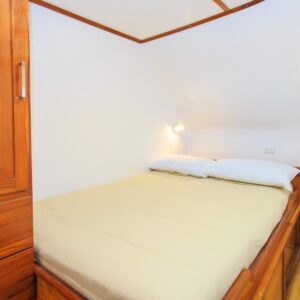
- Accommodation in double cabins.
- Three meals a day, drinking water, tea or coffe
- Excursions in the islands with English Speaking Nature Guide.
Cost excludes
- Galapagos National Park Tax: USD 200.00 to be paid in cash in Galapagos
- Galapagos Transit Card: USD 20.00 per person
- Soft drinks and alcoholics beverages.
- Snorkeling Equipment
- Tips.






Reviews
There are no reviews yet.